

Imagine a world where your customer service is not just efficient, but also available 24/7, ready to meet your needs at any moment. This isn’t just a futuristic dream—it’s a reality made possible through AI in customer service automation.
You might be wondering how AI can transform your customer experience and what benefits it could bring to your business. Well, you’re about to find out. AI doesn’t just streamline processes; it creates a personalized, engaging experience for every customer.
It learns from interactions, predicts needs, and offers solutions before problems even arise. As you dive deeper into this article, you’ll discover how AI can enhance your customer service, making it smarter and more responsive. Curious? Keep reading to find out how AI is not just changing the game—it’s rewriting the rules.
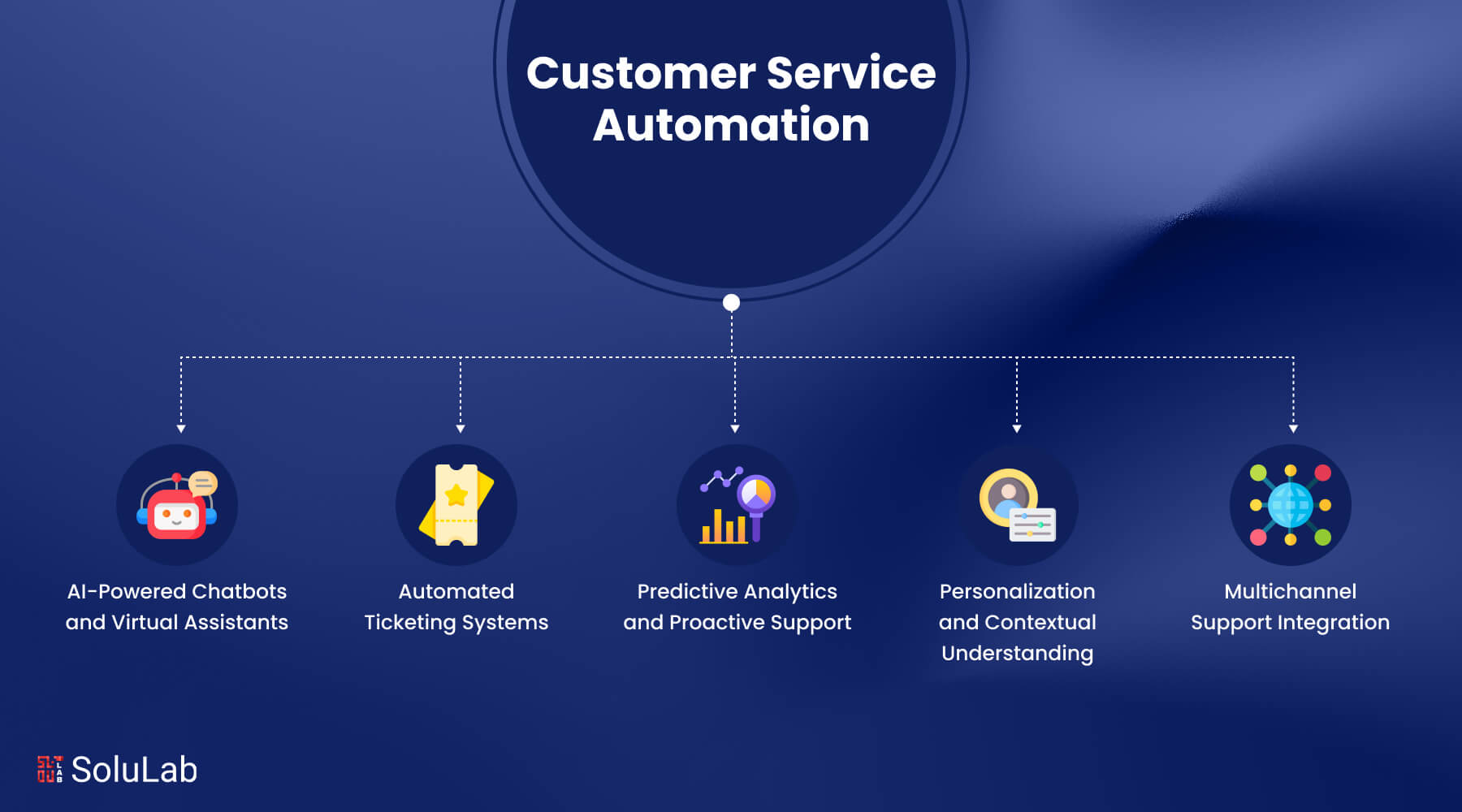
Credit: www.solulab.com
Ai-powered Chatbots
AI-Powered Chatbots are transforming customer service by providing instant and efficient responses. They are not just about technology; they are about improving the customer experience. Whether you have a simple query or need a guided conversation, these intelligent bots are here to help. Let’s explore how they make your life easier.
24/7 Availability
Imagine needing help at midnight. Would you find a human agent? Probably not. This is where AI chatbots shine. They are always available, offering assistance whenever you need it.
Think about the convenience. No more waiting for business hours. Your questions are answered instantly, regardless of the time zone. This constant availability is a game-changer for customer service.
Handling Simple Queries
Not every question requires a human touch. AI chatbots excel at handling simple queries. From tracking orders to resetting passwords, they can manage these tasks effortlessly.
Why waste time with repetitive questions when a chatbot can do it for you? It’s efficient and frees up human agents for more complex issues. You get quick answers without any hassle.
Guided Conversations
Have you ever felt lost during a conversation with a customer service agent? AI chatbots guide you through the process. They use predefined scripts to ensure you get accurate information.
These guided conversations create a smooth experience. You know what’s happening at each step and can make informed decisions. Wouldn’t it be great if every customer interaction was this straightforward?
AI-powered chatbots are not just about technology; they are about enhancing your experience. They save time, reduce frustration, and provide clarity. How are you using chatbots to improve your customer interactions?
Voice Recognition Systems
Voice recognition systems boost customer service automation by providing quick, efficient responses. These systems understand and interpret speech, enhancing customer interactions. AI-driven technology helps reduce wait times and improve accuracy, making support more accessible and user-friendly.
Voice recognition systems are transforming customer service automation. Imagine calling a service hotline and having a machine understand you perfectly. This isn’t science fiction—it’s happening now. Businesses use these systems to streamline customer interactions and provide faster solutions. You might wonder how your voice is understood so accurately. Let’s dive into some key components that make this possible.Natural Language Processing
Natural Language Processing (NLP) is crucial for voice recognition systems. It allows machines to understand and respond to human language. Think about talking to your virtual assistant. You ask a question, and it provides an answer immediately. This is NLP at work. It breaks down your speech, identifies key phrases, and delivers relevant responses. NLP helps machines learn from conversations. They adapt to different accents and slang. This means the more you interact, the smarter they become. Have you noticed your digital assistant understands you better over time? It’s not magic—it’s NLP continuously improving its skills.Speech-to-text Accuracy
Accuracy in translating speech to text is vital for effective communication. Imagine a situation where you tell a virtual assistant to “book a flight to Paris,” but it hears “cook a light parrot.” Frustrating, right? Speech-to-text technology reduces these errors, ensuring your words are captured correctly. Technological advancements have enhanced this accuracy. Companies are investing in sophisticated algorithms that improve recognition rates. Your voice commands are now understood with higher precision, making interactions smoother and more reliable.Customer Sentiment Analysis
Understanding the emotions behind your words is key to providing personalized service. Customer sentiment analysis does just that. It gauges your mood and intent by analyzing your speech patterns. Ever felt like a customer service agent knows exactly how you feel? That’s sentiment analysis in action. This technology helps businesses tailor their responses. If you’re upset, it prompts them to offer solutions quickly. Conversely, if you’re happy, it might encourage you to explore more services. It creates a more empathetic and effective service experience. Voice recognition systems are advancing customer service automation. They understand your needs better and respond more accurately. How do you think this technology will evolve next? Can voice recognition systems anticipate your needs before you even express them? The possibilities are exciting and endless.Personalized Customer Interactions
AI enhances customer service automation by enabling personalized interactions. Chatbots and virtual assistants provide tailored support, understanding customer needs better. This approach improves satisfaction and efficiency.
In today’s fast-paced digital world, personalized customer interactions are more important than ever. You know the feeling when a brand seems to “get” you? That’s the magic of AI in customer service automation. It allows businesses to engage with you on a personal level, making each interaction feel unique and valued.Tailored Recommendations
Imagine visiting your favorite online store and instantly seeing products you love. AI analyzes your browsing history and purchase behavior to recommend items that match your taste. This not only saves you time but also enhances your shopping experience, making you feel like the store is tailored just for you.User Data Integration
AI systems gather data from multiple sources to create a comprehensive view of your preferences. By integrating data from your social media, previous interactions, and even feedback, businesses can offer more meaningful service. This integrated approach ensures that your needs are understood and addressed promptly.Predictive Customer Insights
AI uses predictive analytics to anticipate your future needs. If you’ve ever received an offer just when you were thinking about a product, that’s AI at work. By analyzing trends and patterns in your behavior, businesses can proactively address your needs, making you feel valued and understood. Have you ever wondered how much more satisfying your interactions would be if every company could anticipate your needs? This is the potential of AI in customer service. It’s not just about the technology but about making your experience seamless and personalized. How would you like your next customer service interaction to be?
Credit: www.aeologic.com
Streamlining Operations
Streamlining operations in customer service is essential for businesses today. AI plays a crucial role in enhancing efficiency and reducing manual tasks. By automating processes, companies can save time and improve service quality. This transformation helps in meeting customer expectations quickly.
Automated Ticketing Systems
AI-powered systems manage customer inquiries efficiently. They categorize tickets based on urgency and topic. This reduces the workload on human agents. Automation ensures tickets are addressed promptly. It helps in tracking issues and maintaining customer satisfaction.
Workflow Optimization
AI enhances workflow by automating routine tasks. It streamlines communication and data sharing between departments. This leads to smoother operations and fewer errors. Employees can focus on complex tasks. AI manages repetitive processes effectively.
Reducing Response Times
Quick responses are vital in customer service. AI tools analyze data to provide instant solutions. They cut down waiting times significantly. Customers receive faster assistance. This boosts satisfaction and loyalty. Reducing delays enhances user experience.
Challenges And Considerations
Integrating AI in customer service automation presents unique challenges. Balancing efficiency with personalized touch is crucial. Addressing privacy concerns and ensuring seamless human-AI collaboration are key considerations.
As businesses increasingly turn to AI for customer service automation, they encounter a unique set of challenges and considerations. While AI can streamline operations and improve efficiency, it also brings about concerns that need careful management. These challenges can impact both the customer experience and the business’s reputation.Privacy And Security Concerns
AI systems in customer service handle vast amounts of personal data. Protecting this data is paramount. Breaches can lead to loss of trust and potential legal issues. You might wonder if your personal information is safe when interacting with AI. Companies must implement robust security measures. Encryption and regular audits are essential steps. Transparency is key. Customers should be informed about how their data is used. This builds trust and confidence.Maintaining Human Touch
AI can handle repetitive tasks efficiently, but maintaining a human touch is crucial. Customers often seek empathy and understanding that AI might lack. Imagine calling a customer service line and speaking only with a robot. Would you feel valued? Balancing automation with human interaction enhances customer satisfaction. Personalized responses and human oversight can bridge the gap. Consider how a tailored approach can make customers feel valued and understood.Handling Complex Issues
AI can efficiently manage straightforward queries, but complex issues are another story. These often require human intervention. Think about the last time you had a unique problem. An automated response might not have been helpful. AI should complement, not replace, human expertise. Training AI to recognize when to escalate issues to a human can improve efficiency. This ensures complex problems are resolved effectively. How do you balance automation with human expertise in your customer service strategy? Addressing these challenges thoughtfully can lead to a more effective and trusted customer service experience.Future Trends In Ai Customer Service
The future of AI in customer service is bright and full of potential. With advancements in technology, AI is set to transform how businesses interact with customers. As you look ahead, consider how these emerging trends might impact your own customer service strategies.
Emerging Technologies
AI technologies are rapidly evolving, bringing new tools to enhance customer service. Chatbots are getting smarter, capable of understanding complex queries and providing more accurate responses. Think about how these advancements can streamline your customer interactions. Could smarter chatbots reduce wait times and improve customer satisfaction?
Visual AI is also gaining traction. Imagine a system that can analyze customer emotions from images and videos. This could help tailor responses to meet customer needs better. Have you considered how visual AI could personalize your service?
Integration With Iot
AI and IoT are a powerful combination. Devices connected to the Internet of Things can provide valuable data about customer preferences and behavior. Integrating AI with IoT can lead to more customized service experiences. For instance, smart home devices could alert you when a customer needs support. Are you ready to harness this data for a more proactive approach?
IoT integration also offers opportunities for predictive maintenance. AI can analyze data from connected devices to predict issues before they occur, reducing downtime. How might predictive maintenance improve your service quality?
Continuous Learning Systems
AI systems are now capable of continuous learning, adapting to new information over time. This means your AI customer service tools can improve as they interact with more customers. These systems can learn from past mistakes and successes, becoming more efficient. Is your AI setup ready to learn and evolve with customer needs?
Continuous learning can also lead to better personalization. As AI gathers more data, it can offer increasingly personalized recommendations and solutions. How could improved personalization enhance your customer relationships?
As you explore these future trends, consider how each one might fit into your business model. Are you prepared to leverage AI to improve customer service and stay ahead of the curve?
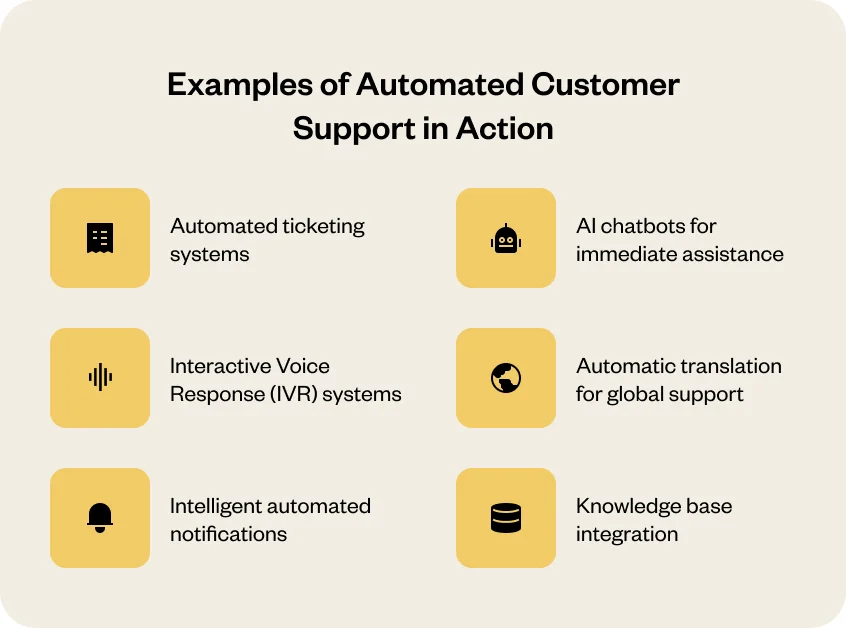
Credit: yellow.ai
Frequently Asked Questions
How To Use Ai To Automate Customer Service?
Implement AI chatbots to handle repetitive inquiries. Use AI for sentiment analysis to prioritize urgent cases. Automate ticket routing with AI algorithms. Provide AI-driven self-service options for customers. Integrate AI with CRM systems for personalized responses.
What Is The Ai Tool For Customer Service?
AI tools for customer service automate tasks, offer 24/7 support, and enhance customer experiences. Popular options include chatbots like ChatGPT, conversational AI, and virtual assistants. They handle queries, provide solutions, and improve efficiency. Businesses benefit from reduced response times and increased customer satisfaction using these technologies.
What Is The Key Benefit Of Ai In Customer Support Automation?
AI enhances customer support by providing 24/7 service, improving response time, and increasing efficiency. It can handle repetitive queries, freeing up human agents for complex issues. AI also analyzes data to offer personalized experiences, boosting customer satisfaction and loyalty.
Can I Use Chatgpt For Customer Service?
Yes, you can use ChatGPT for customer service. It handles inquiries, provides quick responses, and enhances customer satisfaction. Ensure it complements human agents for complex issues.
Conclusion
AI reshapes customer service automation. It offers faster responses. Reduces human errors. Enhances customer satisfaction. Businesses gain efficiency. Customers enjoy smoother experiences. AI analyzes data swiftly. Identifies trends easily. Personalizes interactions effectively. Challenges exist. Data privacy concerns remain. Balance is key.
Human touch still matters. Blend AI with empathy. Future holds exciting possibilities. Companies should stay informed. Adapt to changes wisely. Embrace AI’s benefits responsibly. Focus on customer needs. Technology aids progress. Human connection stays vital. Engage customers meaningfully. Continuously improve services.
AI tools evolve. Opportunities abound. Act thoughtfully. Success follows.
