
Imagine sending out an email to your subscribers, confident that it will boost your sales, only to receive a lukewarm response. Frustrating, right?
If you’ve ever faced this, you might wonder how you could have anticipated what your audience would prefer. This is where AB testing in email marketing becomes your secret weapon. It allows you to peek into the minds of your audience and understand what truly resonates with them.
By testing different elements of your emails, you can refine your strategy, increase engagement, and ultimately, drive more conversions. Curious to discover how AB testing can transform your email campaigns? Let’s dive into the purpose of this powerful tool and how it can revolutionize your marketing efforts.

Credit: zapier.com
Ab Testing Basics
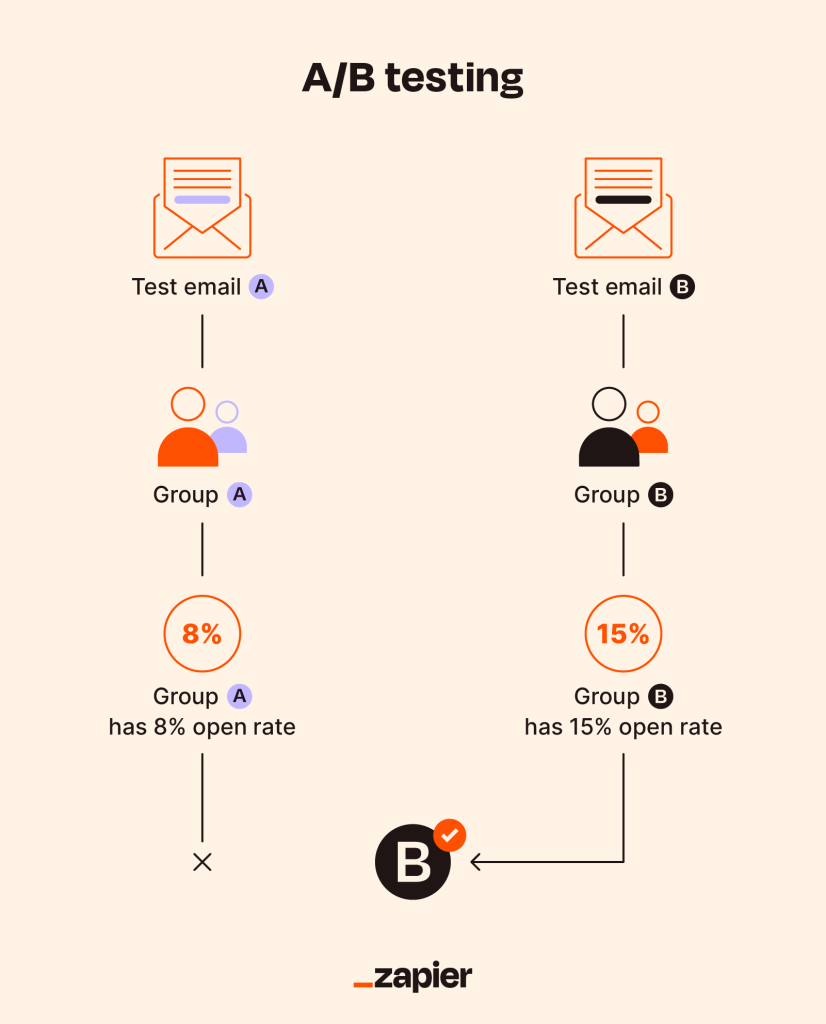
Email marketing is a powerful tool. Yet, its success often depends on understanding what engages your audience. AB testing, or split testing, is a method used to optimize email campaigns. It allows marketers to compare two versions of an email to see which performs better. This process helps refine messages, designs, and calls to action. Understanding the basics of AB testing can improve your marketing strategy significantly.
Definition And Concept
AB testing involves sending two variants of an email to two groups. Each group receives a different version. The goal is to measure which version gets more engagement. Metrics like open rates and click-through rates are analyzed. This method provides insights into audience preferences. AB testing is a strategic way to make data-driven decisions.
Importance In Digital Marketing
AB testing holds great importance in digital marketing. It helps marketers understand what resonates with their audience. Using AB testing, you can improve email performance effectively. This method also allows marketers to test subject lines, designs, and content. The insights gained lead to better engagement and higher conversion rates. It is a crucial practice for enhancing marketing strategies and reaching goals.
Credit: www.constantcontact.com
Improving Open Rates
Email marketing is a powerful tool, but its success hinges on one crucial factor: open rates. Improving open rates is often the first step in ensuring your email campaigns are effective. A/B testing plays a vital role here, enabling you to experiment and analyze different elements to see what truly resonates with your audience. Let’s dive into how subject line variations and sender name impact can make a difference.
Subject Line Variations
Subject lines are the gateway to your emails. They are often the deciding factor for whether your message gets opened or ignored. A/B testing allows you to try different subject lines, seeing which ones grab attention. Do questions work better? Or maybe urgency?
Consider this: you might think a straightforward subject line is best, but your audience might respond more to curiosity-driven phrases. Testing different styles and tones can reveal insights you didn’t expect. What if a playful subject line increases your open rates by 20%? Only testing can tell.
Sender Name Impact
The sender name is another pivotal element in your email’s open rate. Have you considered the difference between using a company name versus a personal name? People might feel more connected to a personal name, perceiving the message as more intimate and trustworthy.
Through A/B testing, you can find out if your audience prefers emails from “Marketing Team” or “Jessica from XYZ Company.” You might discover that a sender name reflecting a real person increases open rates. It’s about building a relationship, not just sending a message.
Your audience’s preferences can be surprising. A/B testing helps you understand them better, improving your strategy effectively. What adjustments can you make today to ensure your emails get opened tomorrow?
Enhancing Click-through Rates
Enhancing click-through rates in email marketing involves strategic testing. A/B testing is key. It helps identify what content resonates with your audience. This process can transform how subscribers interact with your emails. Focusing on specific elements can improve engagement. Below, we explore two crucial components.
Call-to-action Optimization
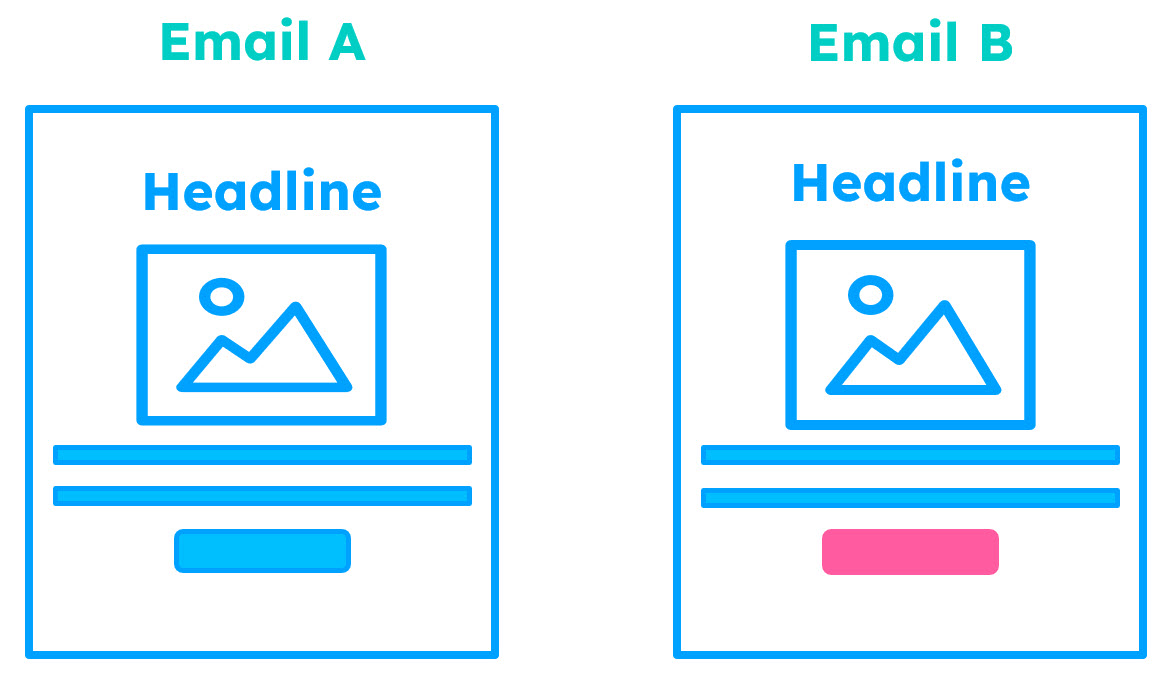
The call-to-action (CTA) is vital in any email. It guides readers to take the next step. Testing different CTAs can reveal which wording works best. Simple changes in text can make a big impact. For instance, “Shop Now” versus “Discover More” may yield different results. Experiment with colors and button sizes too. These elements can affect click rates significantly.
Link Placement Strategies
Where you place links matters. Readers often skim emails quickly. Strategic link placement can catch their eye. Try placing links at the beginning or end of an email. Test which location gets more clicks. You might find that in-text links perform better than buttons. Or vice versa. The goal is to make it easy for readers to engage with your content.
Boosting Conversion Rates
AB testing in email marketing is essential. It helps improve conversion rates effectively. By experimenting with different elements, marketers find what resonates with their audience. This approach allows for better targeting and results in higher engagement.
Understanding what your subscribers prefer is key. Testing helps reveal insights that enhance strategy. An optimized email leads to more actions from recipients.
Content Personalization
Personalized content attracts attention. It shows you understand your audience’s needs. AB testing helps identify which personalized elements perform best. Different subject lines and greetings can make a big difference.
Testing personalized messages helps refine your approach. You learn what works and what doesn’t. This creates emails that speak directly to subscribers. The result? Increased engagement and conversions.
Testing Offer Types
Different offers appeal to different people. Some prefer discounts. Others like free trials or exclusive content. Testing helps determine which offer types generate the most interest.
Experimenting with various offers provides insights. You understand what drives clicks and sales. Tailoring offers to audience preferences boosts conversion rates significantly.
Audience Segmentation
Audience segmentation is a critical aspect of A/B testing in email marketing. It allows you to deliver tailored content to specific groups, ensuring your message resonates with each unique segment. By understanding who your audience is, you can craft emails that speak directly to their interests and needs, resulting in higher engagement and conversion rates.
Targeted Content Delivery
Imagine receiving an email that addresses your specific interests and needs. It feels personal and relevant, right? This is the power of targeted content delivery. When you segment your audience, you can create email content that aligns with the preferences of each group.
Consider a scenario where you have a diverse audience with varying interests. By segmenting them based on their past interactions or purchase history, you can send customized emails that cater to their specific desires. This approach not only boosts engagement but also builds a stronger relationship with your audience.
Demographic Variations
Demographic variations play a significant role in shaping your email marketing strategy. Different age groups, locations, and genders may respond differently to your content. A/B testing allows you to explore these variations and understand how each demographic interacts with your emails.
For instance, if you notice that younger audiences prefer short and dynamic content, while older groups appreciate detailed information, you can adjust your emails accordingly. This insight helps you optimize your email marketing efforts, ensuring each demographic receives content that resonates with them.
Have you ever considered how your audience’s demographic characteristics influence their interaction with your emails? By leveraging A/B testing, you can gain valuable insights and tailor your content to meet the unique needs of each segment.

Credit: www.omnisend.com
Reducing Unsubscribe Rates
Reducing unsubscribe rates is crucial for maintaining a healthy email list. Subscribers leave when they feel overwhelmed or uninterested. AB testing in email marketing helps find the right mix to keep your audience engaged.
Balancing Frequency
Too many emails can annoy your subscribers. Not enough can make them forget you. AB testing helps find the sweet spot. Test different frequencies to see what works best. Some audiences prefer weekly updates, others monthly. Discover the ideal timing to keep your list engaged and active.
Content Relevance
Subscribers want content that speaks to them. Irrelevant information can lead to unsubscribes. AB testing allows you to experiment with different content types. Find out what resonates with your audience. Tailor your messages to their interests. This keeps your emails valuable and reduces unsubscribe rates.
Analyzing Test Results
Analyzing test results in A/B testing for email marketing is where the magic happens. You’ve set up your test, sent out your variations, and now it’s time to dig deep into the data. This stage is crucial because it helps you understand what works and what doesn’t, guiding you to improve your future campaigns. But how do you make sense of the numbers and charts? Let’s break it down.
Interpreting Data
Data interpretation is like reading a map; you need to know what each symbol and sign means to reach your destination. Look at open rates, click-through rates, and conversions for each variation. These metrics are your compass. Do you notice a significant difference between your A and B versions? If yes, your hypothesis might be correct.
Don’t just stop at the numbers. Consider the context. Did a particular subject line resonate more because of recent events? Maybe a call-to-action was clearer in one variation. Reflect on these aspects to understand why your audience reacted the way they did.
Making Informed Decisions
Once you’ve interpreted the data, it’s time to make decisions. Consider what changes to implement based on your findings. If version B had a higher click-through rate because of its catchy subject line, think about integrating similar styles in future emails.
Decisions should be driven by insights. Don’t just copy what worked; understand why it worked. This is where your creativity comes in. How can you apply these insights to new ideas and strategies? Ask yourself, how can this data inspire a fresh approach?
Remember, data is only as good as the action it inspires. Use it to fuel your creativity and strategy. Each test result is a stepping stone to creating emails that resonate more with your audience.
Best Practices
A/B testing in email marketing helps discover what appeals to your audience. It allows you to compare different versions of emails. This process identifies which elements increase engagement, leading to better results.
Best Practices for AB Testing in Email Marketing AB testing, also known as split testing, is a pivotal strategy in email marketing. It enables you to optimize your campaigns for better engagement and conversions. But how do you execute AB testing effectively? By following some best practices, you can ensure your tests are meaningful and impactful.Testing One Element At A Time
When you conduct AB tests, focus on one element at a time. This approach allows you to pinpoint exactly what influences your audience’s behavior. For instance, if you’re testing subject lines, don’t simultaneously alter the email’s content or images. This ensures any change in performance is due to the subject line alone. Consider how changing just a few words can impact open rates. You might be surprised at how a simple tweak can increase engagement. Have you ever changed a subject line and noticed a spike in opens? That’s the power of testing one element at a time.Setting Clear Goals
Before running any AB test, set clear and specific goals. What are you aiming to achieve with your test? Is it higher open rates, better click-through rates, or increased conversions? For example, if your goal is to boost click-through rates, focus on elements like call-to-action buttons or links within the email. This clarity will guide your testing strategy and help you interpret the results accurately. Remember, vague goals lead to vague results. Clearly defined objectives will illuminate the path to successful email marketing. Ask yourself: What do I want this AB test to accomplish? With a clear goal in mind, you can navigate your tests with purpose and precision.Challenges And Pitfalls
AB testing in email marketing offers valuable insights. Yet, it also poses challenges and pitfalls. Many marketers struggle with common mistakes and limitations. Understanding these can lead to better results and improved strategies.
Common Mistakes
Many marketers test too many elements at once. This can muddle results. Focus on one change at a time. Test subject lines or call-to-action buttons separately. Another mistake is testing without enough data. Small sample sizes lead to unreliable outcomes. Ensure your audience size is adequate for meaningful analysis.
Neglecting the timing of tests is another error. Sending emails at varied times can skew results. Standardize send times for consistency. Some marketers rush tests and draw conclusions too quickly. Allow enough time for accurate data collection.
Overcoming Limitations
Recognize the limitations of AB testing. It provides insights on specific elements, not overall strategy. Use results to refine, not overhaul, your approach. Balance is key. Don’t rely solely on AB testing. Combine it with other data sources for a fuller picture.
Limited segmentation can hinder meaningful insights. Segment your audience effectively. Test variations tailored to different demographics. This enriches data quality. Ensure your test reflects real-world conditions. Avoid artificial setups that don’t mimic actual scenarios. Maintain authenticity for reliable results.
Future Of Ab Testing In Email Marketing
The future of AB testing in email marketing looks promising and dynamic. As technology evolves, so do the tools and techniques marketers use. AB testing remains a key strategy to optimize email campaigns. It helps businesses understand their audience better. Predicting future trends in AB testing can guide marketers in crafting effective strategies.
Technological Advancements
New technologies will shape the future of AB testing. AI and machine learning offer smarter data analysis. They help identify patterns and predict outcomes with accuracy. Automation tools will streamline the testing process. They allow marketers to set tests without manual input. These advancements will make testing quicker and more efficient. Personalization will also improve, tailoring emails to individual preferences.
Trends To Watch
Several trends will influence AB testing in email marketing. Real-time testing will become more popular. Marketers will adjust campaigns based on instant feedback. Multivariate testing will gain traction. It tests multiple variables at once, providing deeper insights. Privacy concerns will impact testing strategies. Marketers must ensure compliance with data protection laws. Additionally, mobile optimization will be crucial. More people access emails via mobile devices.
Frequently Asked Questions
What Is A/b Testing In Email Marketing?
A/B testing in email marketing involves sending two variations of an email to different subscriber groups. The goal is to determine which version performs better based on specific metrics like open rate or click-through rate. This helps marketers optimize their email campaigns for better engagement and conversions.
Why Is A/b Testing Important For Emails?
A/B testing is crucial as it helps identify what resonates with your audience. By testing different elements like subject lines, images, or call-to-actions, you can enhance email performance. This leads to higher engagement, better click-through rates, and ultimately, increased conversions and revenue.
How Does A/b Testing Improve Email Performance?
A/B testing improves email performance by providing data-driven insights. It helps identify which elements of your email content are more effective. By understanding what works best, marketers can refine their strategies, leading to more engaging emails and improved metrics like open rates and click-through rates.
What Elements Can Be Tested In Emails?
Various elements can be tested in emails, including subject lines, images, and call-to-action buttons. Other elements like email layouts, personalization techniques, and send times can also be tested. Testing these elements helps in optimizing emails to better meet subscriber preferences and improve overall campaign performance.
Conclusion
AB testing in email marketing is essential. It helps refine your strategy. By testing variations, you discover what works best. This leads to better engagement. Higher open and click rates follow. Understanding your audience becomes easier. You can tailor content to their preferences.
It’s all about making informed decisions. Small changes can have big impacts. Consistent testing builds successful campaigns. Your emails become more effective over time. Embrace AB testing to improve results. Keep experimenting and learning. This approach enhances your marketing efforts.
Remember, every test brings new insights. So, start testing today and see the benefits.
