

Ever wondered why some emails catch your attention while others get lost in your inbox? Timing might be the secret ingredient.
Choosing the right moment to send your email marketing can skyrocket your engagement and boost your sales. Imagine your message arriving at the exact moment when your audience is most receptive, making them more likely to click, read, and act.
But when exactly is this perfect time? You might be missing out on potential conversions if you’re not timing your emails right. Let’s dive into the science and strategies behind finding that sweet spot. By the end of this article, you’ll be equipped with the insights to transform your email campaigns into powerful tools for connection and conversion. Ready to unlock the potential of perfect timing? Let’s get started.

Credit: coschedule.com
Importance Of Timing In Email Marketing
Timing plays a crucial role in email marketing effectiveness. Sending emails at the right moment can boost engagement and conversions. It helps in reaching your audience when they are most receptive. Timing affects how your email stands out in a crowded inbox.
Understanding the importance of timing can elevate your campaign’s success. It can increase open rates and click-through rates. It’s about knowing your audience and their habits. This understanding leads to better interaction and business growth.
Understanding Audience Behavior
Knowing your audience’s daily routine is vital. People check emails at different times. Some prefer morning, others in the evening. Identifying these patterns aids in scheduling emails effectively.
Study past engagement data. It offers insights into when recipients open emails. Use this information to plan your future campaigns. It ensures your emails get noticed and read.
Analyzing Time Zones
Consider your audience’s geographical location. Different time zones influence email timing. Sending emails at the right local time boosts visibility. It ensures your message reaches recipients when they’re active.
Segment your email list based on time zones. Tailor sending times accordingly. This practice improves engagement and interaction across different regions.
Testing And Optimization
Experiment with different sending times. A/B testing can reveal optimal times for your audience. Track the results and refine your strategy. This ongoing process helps achieve the best outcomes.
Monitor metrics like open rates and click rates. Use these insights to adjust timing. A well-timed email can significantly impact your marketing goals.
Industry Trends And Insights
Stay informed about industry benchmarks. They provide guidance on common successful timing strategies. Use this information to align your timing efforts with proven practices.
Learn from competitors and industry leaders. Observing their timing strategies can offer valuable lessons. Implement these insights into your campaigns for better results.
Analyzing Audience Behavior
Understanding when to send email marketing is crucial for success. Analyzing audience behavior helps you pinpoint the best times. This involves studying their habits and preferences. Get to know your audience’s daily routine. You can tailor your email strategy based on their behavior.
Understanding Time Zones
Time zones impact email delivery. Your audience may be global. Sending emails at the wrong time reduces engagement. Know where your audience lives. Schedule emails based on their local time. This ensures your email reaches them when they are active. Not asleep.
Demographic Preferences
Demographics play a role in email timing. Different age groups have varied online habits. Younger audiences may check emails late at night. Older demographics might prefer early mornings. Gender can influence preferences too. Analyze these factors. Adapt your email schedule accordingly.
Weekdays Vs. Weekends
Choosing the right day for email marketing can boost engagement. Weekdays often see higher open rates as people check work emails. Conversely, weekends offer less competition in inboxes, providing a unique opportunity to capture attention.
Choosing the right time to send your email marketing campaigns can significantly impact your engagement rates. One of the most debated topics is whether weekdays or weekends are more effective for reaching your audience. Each option offers unique advantages, and understanding these can help you make the best decision for your business. Let’s dive into the benefits of sending emails during weekdays versus weekends.Pros Of Weekday Emails
Weekdays are often seen as the prime time for business communications. Many people start their day by checking emails, making mornings a great time to reach them. Sending emails during work hours means your message is likely to be seen during a recipient’s regular routine. Additionally, weekdays offer a consistent opportunity to connect with your audience. Most people have a set schedule during the week, which can make it easier to predict when they will check their inbox. This predictability can help you optimize the timing of your emails for better open rates. However, it’s essential to consider your specific audience. Are your subscribers mainly professionals who check emails during their commute? Or are they busy parents who might prefer to engage during lunch breaks?Benefits Of Weekend Emails
On the other hand, weekends can offer a unique opportunity to capture your audience’s attention. Many people have more free time on weekends, which could lead to higher engagement rates. Without the pressures of work, readers might be more inclined to leisurely browse through their inbox. Moreover, sending emails on weekends can help your message stand out. The volume of emails received tends to be lower, so your email might avoid getting lost in the weekday clutter. This can be especially beneficial if your content is more lifestyle-focused or entertainment-oriented. Consider your audience’s habits. Do they enjoy catching up on emails with a cup of coffee on a lazy Sunday? You might find that weekend sends resonate better with them. Ultimately, the best time to send your emails depends on your audience’s preferences and behaviors. Testing both weekdays and weekends can provide valuable insights into what works best for your subscribers. So, why not try both and see which day yields the best results for your campaigns?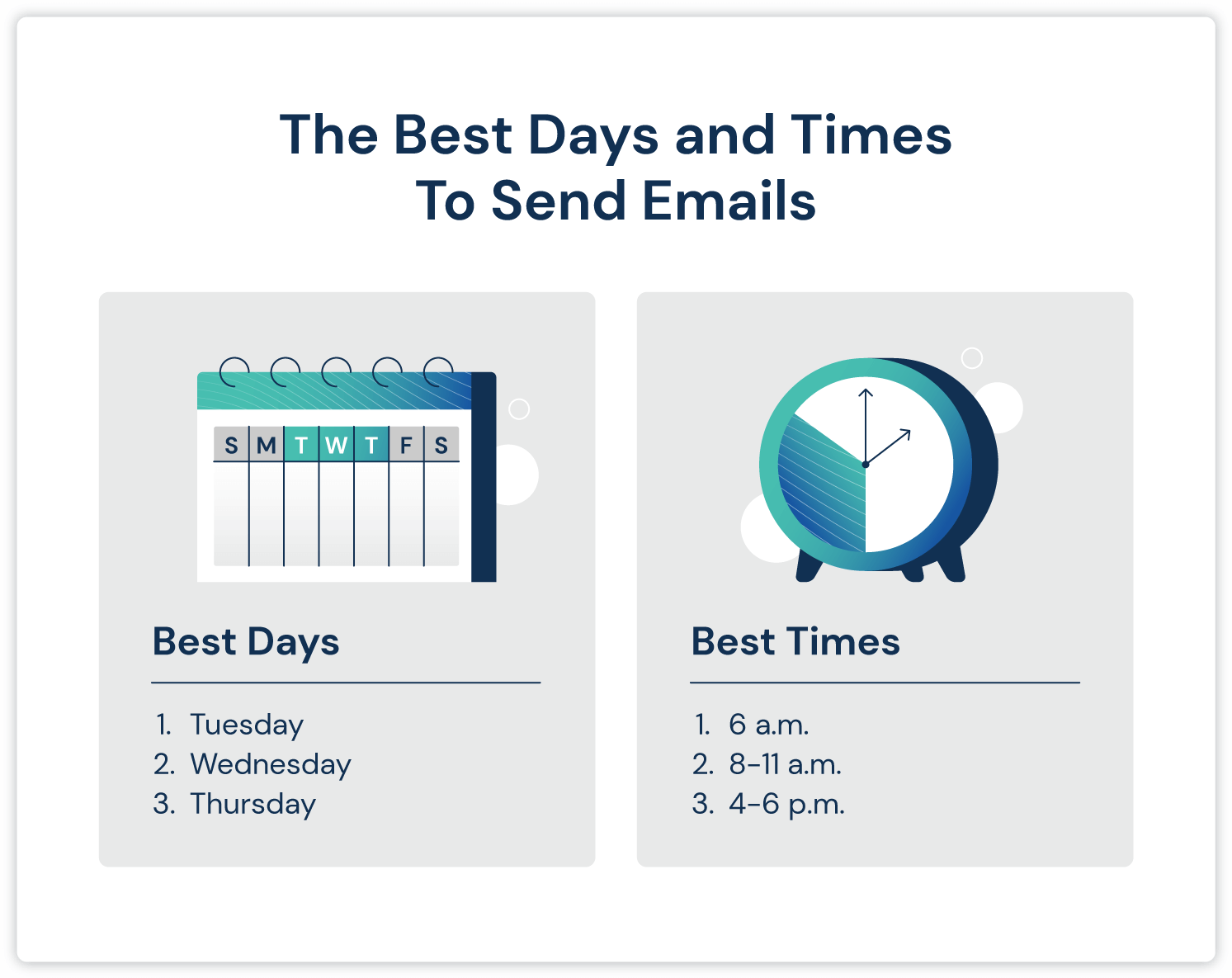
Credit: mailshake.com
Optimal Times During The Day
Determining the best time to send email marketing can be challenging. Time of day plays a crucial role in audience engagement. Choosing the right moments can lead to higher open and click rates. This section explores optimal times during the day for sending emails.
Morning Sends
Mornings can be a productive time for email marketing. People often check their emails first thing. Between 9 AM and 11 AM is ideal. Subscribers are alert and ready for new information. Morning sends can capture attention before the day gets busy.
Afternoon Engagement
The afternoon is a strong contender for email sends. After lunch, people often revisit their inboxes. Between 1 PM and 3 PM is optimal. This timeframe allows for a second chance at visibility. Afternoon emails benefit from renewed focus.
Evening Considerations
Evening sends offer unique advantages. People relax and check emails after work. Between 6 PM and 8 PM can be effective. Leisure time creates opportunities for engaging content. Evening emails can reach those unwinding from their day.
Industry-specific Timing
Choosing the right time for email marketing depends on the industry. Retail businesses see success on weekdays, while B2B companies benefit from mornings. Understanding your audience’s habits helps identify peak times for engagement and responses. Timing varies, so it’s vital to tailor schedules to industry trends.
In the world of email marketing, timing can make or break your campaign’s success. Sending emails at the right moment can significantly boost open rates and engagement. However, the best time isn’t a one-size-fits-all. It varies across industries due to different customer behaviors and expectations. Understanding industry-specific timing can give you a competitive edge and help you connect with your audience when they’re most receptive.Retail Sector Timing
In retail, weekends often see a surge in online shopping as people have more leisure time. Sending emails on Saturday or Sunday mornings can capture this audience. A personal example: last holiday season, I sent a promotional email on a Saturday morning and saw a 30% increase in sales compared to weekday campaigns. Weekday evenings are also prime time for retail emails. Many consumers browse and shop after work to relax. Consider sending emails around 8 PM to catch this window of opportunity.B2b Communication
For B2B emails, Tuesday is often the sweet spot. Many professionals start their workweek by catching up on Monday, leaving Tuesday open for fresh content. Mid-morning, around 10 AM, can be the perfect time to reach your audience when they’re settled into their day. In my experience, sending B2B emails on Thursday mornings can also yield positive results. As the week wraps up, professionals are more open to engaging with new ideas and offers. Have you tried experimenting with different days to see what works best for your business?Non-profit And Fundraising
Non-profits and fundraising campaigns thrive on the emotional connection with their audience. Early in the week, like Monday or Tuesday, can be effective. People are more likely to engage when they’re starting their week with fresh intentions. Evenings during midweek are also promising. Sending emails around 7 PM can catch people after dinner when they’re more relaxed. Last year, a midweek evening email helped our fundraising campaign surpass its goal by 15%. Have you considered adjusting your timing to match your audience’s emotional readiness? By tailoring your email sending times to your specific industry, you can maximize engagement and achieve better results. What timing strategies have you found effective in your campaigns?Testing And Analyzing Results
Determining the best time to send email marketing involves testing and analyzing results. Experiment with various days and times. Track engagement metrics like open rates and clicks to find patterns. Adjust your strategy based on the data for optimal timing and improved effectiveness.
Testing and analyzing results is crucial in email marketing. It’s how you discover the optimal time to send your emails. By experimenting and understanding the data, you can significantly improve your open and click rates.A/b Testing Strategies
A/B testing is a powerful tool in your email marketing toolkit. It’s about trying different versions of an email to see which one performs better. You might test variations like sending times, subject lines, or even the call to action. Consider sending one version of your email on a Tuesday morning and another on a Thursday afternoon. Compare the results to see which day and time get more engagement. This approach helps identify patterns in your audience’s behavior. The key is to change only one variable at a time. This way, you can pinpoint the exact factor that impacts your email’s success.Interpreting Open And Click Rates
Open and click rates are more than numbers; they tell a story about your audience’s preferences. Open rate shows how many people actually open your email. Click rate indicates how many engage with your content by clicking links. Imagine sending an email with a catchy subject line and a clear call to action. If your open rate is high but your click rate is low, it might mean your email content needs more compelling elements. Ask yourself: Are your links clear and relevant? Is the email content aligned with the subject line? Analyzing these metrics helps refine your future campaigns for better results. Regularly reviewing these rates allows you to tweak your strategy. It ensures that your emails not only reach inboxes but also resonate with your audience.Adapting To Seasonal Changes
Email marketing success depends on timing. Adapting to seasonal changes can enhance engagement. Seasons influence consumer behavior and purchasing decisions. Understanding these shifts helps optimize email campaigns.
Holiday Campaigns
During holidays, consumers are more eager to shop. Sending emails at the start of the holiday season can boost engagement. People expect deals and promotions during this time. Highlight special offers in your subject lines. Timing is key. Early mornings or late evenings may work best. Test different times to find what suits your audience.
Summer Vs. Winter Strategies
Summer brings a relaxed vibe. People spend more time outdoors. Emails might be ignored during midday. Early morning or late evening could be ideal. Winter, on the other hand, sees people indoors more often. Midday emails might receive more attention. Adjust your email schedule according to the season. Consider the lifestyle changes each season brings.

Credit: www.linkedin.com
Leveraging Automation Tools
Leveraging automation tools in email marketing can transform how businesses interact with their audience. These tools offer a strategic advantage, ensuring emails reach recipients at the most opportune times. By automating the process, businesses save time and resources, focusing on crafting engaging content instead. The benefits extend beyond convenience. They enhance effectiveness and increase engagement rates.
Benefits Of Scheduling Software
Scheduling software allows marketers to plan email campaigns in advance. This feature ensures messages go out consistently without manual intervention. Consistency builds trust and keeps the audience engaged. Scheduled emails also reduce the risk of errors, ensuring messages reach the right people. Marketers can analyze past performance to choose optimal send times. Data-driven decisions improve open and conversion rates.
Personalization And Timing
Automation tools offer personalized email experiences. They allow customization based on user behavior and preferences. Personalized emails create a sense of connection with the audience. Timing is crucial in email marketing. Sending emails when recipients are most active increases engagement. Automation tools analyze user data to determine these peak times. This ensures that emails are not only seen but also read and acted upon. Personalization combined with perfect timing leads to higher success rates.
Frequently Asked Questions
What Time Is Best For Email Marketing?
The best time for email marketing is typically between 9 AM and 11 AM. This is when people are most likely to check emails. However, it can vary based on your audience. Test different times to see what works best for your specific subscribers.
Which Day Is Ideal For Sending Emails?
Tuesday is often considered the ideal day for sending emails. It generally has higher open and click-through rates. However, Wednesday and Thursday are also good options. To find the best day, analyze your email performance metrics regularly.
How Does Audience Affect Email Timing?
Audience behavior significantly affects email timing. Different demographics have varying online habits. For instance, professionals might check emails in the morning, while younger audiences might prefer evenings. Conduct surveys or analyze data to understand your audience’s preferences better.
Should Weekends Be Avoided For Email Marketing?
Weekends generally have lower open rates compared to weekdays. Many people tend to disconnect from work-related emails. However, if your audience is more active on weekends, it may work for you. Always analyze your specific audience engagement before deciding.
Conclusion
Timing matters in email marketing success. Send emails during peak hours. Monday and Thursday are top days. Early morning or late afternoon works best. Test different times to find what clicks. Your audience’s habits are key. Analyze data regularly. Tweak your strategy as needed.
Stay consistent for better results. Keep emails relevant and engaging. Remember, content is king. Craft messages that resonate with your readers. Build trust and connection over time. Effective timing boosts engagement. Make your email campaigns shine. Start optimizing today for improved outcomes.
